
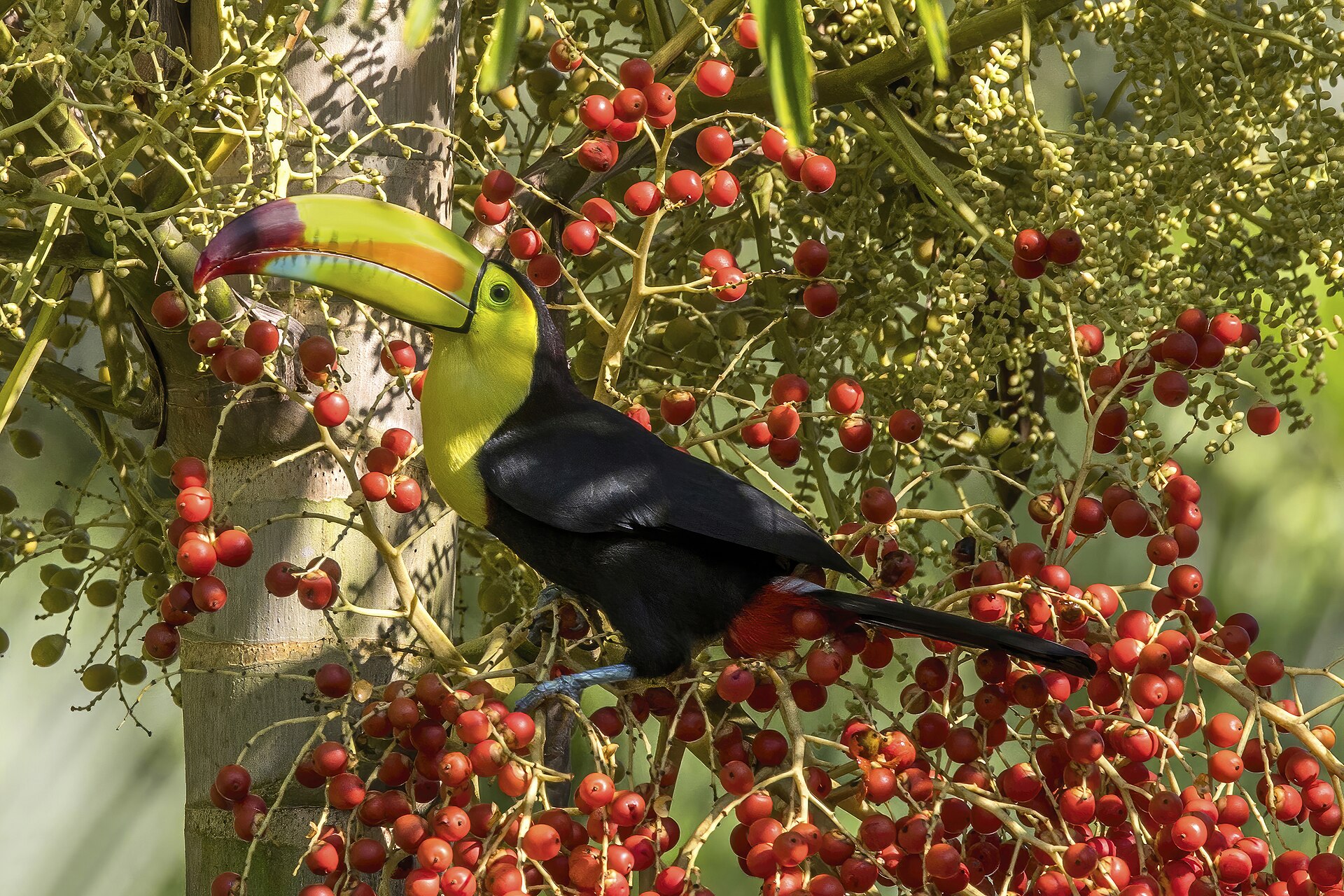
Short answer: December through March. That’s Minca’s dry season, and it lines up with peak numbers of both resident endemics and wintering North American migrants. But “best” depends on what you’re actually optimizing for — bird activity, trail conditions, or just not competing with a busload of holiday travelers for the same trailhead. Here’s the month-by-month breakdown, and what actually changes for the birds themselves once the rain shows up.
Minca runs on a bimodal dry/wet pattern, typical of Colombia’s Caribbean-facing slopes. Dry season runs roughly December to March: clear skies, firm trails, good visibility up into the cloud forest. Wet season covers May through November, with two rainier stretches — one around May, a bigger one around October. April sits in between, the hinge month where one pattern hands off to the other.
What doesn’t change is the temperature. Minca sits at a fairly constant 27–28°C (81–82°F) year-round — June, the warmest month, is barely a degree above January, the coolest. There’s no “winter” here in any sense a visitor would feel. Season in Minca is a rain question, not a temperature one, and that’s worth knowing before you start packing.
This is the version we wish existed when we were first figuring out timing for guests. Rainfall figures are averages — a wet November can still hand you three dry mornings in a row, and vice versa.
| Month | Season | Rain | What it means for birding |
|---|---|---|---|
| January | Dry | Driest month of the year, ~47mm, often just a single rainy day | Migrants at their most reliable and trails at their best — also the tail of Colombia’s Christmas/New Year travel season, so book ahead |
| February | Dry | Low rainfall, lowest humidity of the year | Same clear conditions as January, without the holiday crowd |
| March | Dry | Still low | Last full month of dependable dry trails |
| April | Transitional | Rain starts building | Migrants begin heading back north; resident species ramp up display and nesting activity |
| May | Wet begins | First rainfall peak | Breeding season for many residents — display activity often outweighs the inconvenience of rain |
| June | Wet | Steady rain, warmest month (~28°C) | Mid-year travel bump brings more visitors despite wetter trails |
| July | Wet | Continued rain | Quieter for birding tourism, better rates |
| August | Wet | Continued rain | Similar to July — a good month if you don’t mind a poncho |
| September | Wet, building | Rain increasing | First fall migrants from North America start arriving |
| October | Wettest | ~363mm over ~13 rainy days, humidity peaks near 80% | Fall migration in full swing — mornings are often still clear even in the wettest month |
| November | Wet, tapering | Rain easing off | Migrant numbers building toward the winter peak |
| December | Dry begins | Rain drops off fast | Migrant density near its yearly high, dry trails return — also Colombia’s biggest domestic holiday month, so expect company and higher prices |
Mostly, yes — but “avoid the wet season entirely” is lazier advice than it sounds. Two things get left out of that blanket recommendation:
What most people get wrong is treating this as a single yes/no question. It’s really two separate questions — trail conditions and bird behavior — that happen to point in slightly different directions for part of the year.
Regardless of month, the clock matters more than the calendar on any single day.
One thing that doesn’t show up in general guides: activity shifts uphill through the morning as the lower slopes warm up first. If a lower trail has gone quiet by 8am, the cooler elevation twenty minutes up often hasn’t yet.
Season affects these two groups very differently, and mixing them up leads to bad planning.
Migrants are seasonal by definition — present roughly September through April, with numbers peaking December through March. Wintering North American species that show up in this region include Chestnut-sided Warbler, Golden-winged Warbler, Tennessee Warbler, Baltimore Oriole, and Rose-breasted Grosbeak, among others working their way south from breeding grounds thousands of kilometers away.
Endemics — the birds people actually come to Minca for — are residents. The Santa Marta Parakeet, Santa Marta Antpitta, White-tipped Quetzal, and the rest of the Sierra Nevada’s endemic species aren’t going anywhere, whatever the month. Season changes how easy they are to find and how active they’re being, not whether they’re here. If you want the deeper story on why this range holds so many species found nowhere else — including a hummingbird recently rediscovered after decades presumed extinct — we wrote about that separately.
| Priority | Best window | Trade-off |
|---|---|---|
| Maximum bird activity, don’t mind crowds | Mid-December–early January | Highest prices, book well ahead — peak Colombian holiday travel |
| Same dry conditions, better value | February–March | Almost none — this is usually the sweet spot |
| Breeding/display behavior over checklist volume | April–June | Rain gear required, afternoons often lost |
| Best rates, don’t mind unpredictable weather | July–November | Plan around morning windows; October is the wettest bet |
Worth a caveat: these are long-run averages, and any given year can run wetter or drier depending on El Niño/La Niña conditions in the Pacific. If your dates are flexible, it’s worth checking a current seasonal outlook a few weeks out rather than planning entirely off historical averages.
Whichever window you land on, the daily routine doesn’t change: coffee before first light, straight out to a terrace, binoculars up before the rest of the property is awake. That’s the whole idea behind the rooms here — each one built with its own private terrace facing the forest, so the first hour of the day doesn’t require going anywhere. If you want help picking dates around a specific target species, or just want a second opinion on timing, get in touch and we’ll work through it with you. Curious how a birding-first hostel like this ended up in Minca in the first place? Here’s that story.

Welcome to Minca Seasons! We’re thrilled you’re considering our birdwatching hostel. How can we help make your Sierra Nevada adventure unforgettable?
© Copyright Minca Seasons 2025 all rights reserved